Vendors can pay for more visibility on this website, for example a higher place in a ranking or more room on a page. Commercial relationships can also affect which products we feature and how prominently. Every vendor link is marked the same, whatever the arrangement behind it. The largest vendors in CAE simulation software
cannot hold places 1 to 3. Places 1 to 3 go to challengers, vendors outside the best-known brands in a category,
wherever the category has them; the established names follow from place 4 in their ranked order. How it works: placement disclosure ·
editorial process.
The 11 tools, reviewed

#1 SimScale
Browser-based CFD, structural and thermal simulation · Germany · simscale.com
Cloud CFD and FEA Munich
SimScale runs in the browser on its own cloud, so a three-person engineering team needs no workstation, license server or cluster before the first mesh. The pricing page lays out four plans: a free Community tier, Mechanical for structural and thermal work, Professional for higher-fidelity multiphysics, and Enterprise. Reviewers who only open results never need a paid seat.
- Pricing: Free tier + quoted plans. Community plan is free (10 simulations, up to 2,000 core hours); Mechanical, Professional and Enterprise are listed as request-pricing plans. Free plan: free plan.
- Best for: Small teams starting simulation
- Strengths: Fluid dynamics; Structural mechanics; Thermodynamics.
Where it falls short
Everything runs on the vendor cloud, so a model cannot be solved on a local machine. The free tier covers selected analysis types only, and none of the paid tiers shows a price on the page.
Wrong for
A defense or research group that must solve on isolated hardware, or a specialist who needs custom material models and user subroutines.
Visit SimScale →

#2 COMSOL Multiphysics
Coupled multiphysics modeling platform with add-on modules · Sweden · comsol.com
Multiphysics Add-on modules Stockholm
COMSOL builds a model from geometry through physics to results in one Model Builder, and couples the physics inside the same model instead of passing files between solvers. The Application Builder turns a finished model into a small app for colleagues who do not run simulations, and the Model Manager adds version control.
- Pricing: Quote by license + modules. No prices on the license page; a buyer picks a license type and add-on products, as a term license or a perpetual one. Free plan: none.
- Best for: R&D teams with coupled physics
- Strengths: Model Builder; Application Builder; Model Manager.
Where it falls short
Price depends on the add-on products stacked on the base platform, and the license page shows no figure. Perpetual buyers renew updates and support at 20% of the then-current price after the first 12 months.
Wrong for
A shop that only needs one standard analysis, such as a static stress check on a bracket, and a buyer who wants published pricing.
Visit COMSOL Multiphysics →

#3 OpenFOAM
Free open-source CFD toolbox in C++ · United Kingdom · openfoam.org
Open source CFD GPL
OpenFOAM is a CFD toolbox whose licence removes the per-seat and per-core fees that make commercial flow solvers expensive when a cluster grows. The OpenFOAM Foundation publishes version 14, released in July 2026, with Linux, macOS and Windows routes plus a source pack.
- Pricing: Open source. Free to download and use under a GPL licence; paid support and training come from separate organizations. Free plan: open source.
- Best for: CFD engineers comfortable with code
- Strengths: Free software licence; Source code available; Linux, macOS and Windows runs.
Where it falls short
Support is not part of the download; it is bought from OpenCFD or a third party. Two organizations publish releases under the same name, so a user must pick one distribution and stay on it.
Wrong for
A design engineer who wants a point-and-click workflow with a vendor help desk.
Visit OpenFOAM →

#4 Ansys
Broad engineering simulation portfolio, part of Synopsys · United States · ansys.com
Major vendor Broad portfolio Synopsys
Ansys covers more application areas than any other name in this ranking: electric motors, batteries, gas turbines, antennas, electronics reliability, wind turbine design and topology optimization all appear on its own pages. Its site now sits under the Synopsys brand, and the Student edition is free, which keeps graduates familiar with the tool.
- Pricing: Quote only. No commercial prices on the pages read; Ansys Student software is free and trials are offered. Free plan: free trial.
- Best for: Large engineering departments
- Strengths: Thermal analysis; Electric motors; Battery simulation.
Where it falls short
Commercial pricing is hidden behind a sales conversation, and the product range is large enough that a buyer must work out which modules apply. The site now carries the Synopsys name, so a buyer should ask who the contracting party is.
Wrong for
A startup with one analysis type and no simulation specialist. SimScale or Quanscient offer a lower-friction start.
Visit Ansys →

#5 Simcenter
Siemens simulation and test suite linked to CAD and PLM · Germany · plm.sw.siemens.com
Major vendor Siemens CAD to PLM
Simcenter is Siemens' name for its simulation and physical-test solutions, and since June 2026 it also carries products that came from Altair after Siemens acquired that company. Its main argument is the digital thread: simulation models connect to CAD and product lifecycle data inside the Siemens Xcelerator platform, so results stay tied to the part revision they were run on. Simcenter X offers cloud-powered multi-domain simulation without a local install.
- Pricing: Quote only. No prices shown; contact Siemens, with Simcenter X offered as a cloud-powered multi-domain option. Free plan: none.
- Best for: Siemens CAD and PLM shops
- Strengths: Multi-domain simulation; Simcenter X cloud option; Cloud and HPC scaling.
Where it falls short
The portfolio is large and just absorbed another company's products, so product names and bundles are in motion. The pages read show no price, and the full value assumes other Siemens software. A shop on a different CAD system gets less from the thread.
Wrong for
A small team on non-Siemens CAD that wants to run one analysis this month.
Visit Simcenter →

#6 Quanscient Allsolve
Cloud multiphysics solver with a Python-native SDK · Finland · quanscient.com
Cloud Multiphysics Tampere
Quanscient Allsolve is a cloud-native solver where one plan unlocks every physics module, with no limit on the number of users and email support from application engineers. A plan is built from a core plan, which sets parallel cores, and a credit package, which sets how much can be run.
- Pricing: Core plan + credits. Usage-based: a core plan (32 to 256 and more parallel cores) plus a credit package; the page asks for a pricing request. Free plan: none.
- Best for: Startups and sensor or MEMS teams
- Strengths: All physics included; Unlimited users; Python SDK.
Where it falls short
It is a cloud-only product, and the usage-based credits make a monthly bill hard to forecast before the first project. The listed focus areas are narrow compared with a general suite, and mechanical engineers looking for large-deformation contact analysis will not find it described.
Wrong for
An engineer who needs a CAD-embedded desktop tool or large-deformation structural analysis.
Visit Quanscient Allsolve →

#7 Abaqus (SIMULIA)
Nonlinear finite element analysis from Dassault Systèmes · France · 3ds.com
Major vendor Nonlinear FEA SIMULIA
Abaqus is a finite element package for nonlinear behavior: large deformations, complex contact, advanced materials, impact, vibration and failure. Dassault lists both implicit and explicit solvers, so a quasi-static assembly and a crash-style event can run in the same product family. It belongs to the SIMULIA brand and the 3DEXPERIENCE platform, with release R2026x listed, and academic and student programs feed its user base.
- Pricing: Quote only. No prices on the product page; academic and student license programs are listed, commercial terms come from Dassault. Free plan: none.
- Best for: Nonlinear contact and materials work
- Strengths: Implicit solver; Explicit solver; Large deformation.
Where it falls short
The product page gives no price; commercial access starts with Dassault. It is a structural specialist: fluid dynamics sits in other SIMULIA products. Full value assumes the 3DEXPERIENCE platform, which adds scope a small team may not want.
Wrong for
A product designer who runs occasional linear stress checks.
Visit Abaqus (SIMULIA) →

#8 FLOW-3D
Free-surface CFD with casting, hydraulics and welding editions · United States · flow3d.com
Free surface Casting Santa Fe
FLOW-3D descends from the volume-of-fluid method developed by company founder Tony Hirt, and its TruVOF technique tracks liquid and gas surfaces. The family splits by job: CAST for foundries, HYDRO for water resources and hydraulic infrastructure, AM for additive manufacturing, and WELD for laser welding and keyhole dynamics.
- Pricing: Quote only. No prices shown; the site offers contact with sales, a personalized demo and a distributor finder, plus an academic program. Free plan: none.
- Best for: Casting, hydraulics and AM teams
- Strengths: TruVOF interface tracking; FLOW-3D CAST; FLOW-3D HYDRO.
Where it falls short
It is a specialist: a general product designer will not find structural analysis on its pages. Prices are hidden behind sales contact, and the edition split means a firm doing both casting and hydraulics may license two products.
Wrong for
A company that needs structures, electromagnetics and fluids in one tool, or a team with no free-surface problem to solve.
Visit FLOW-3D →
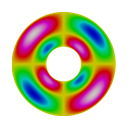
#9 Elmer FEM
Open-source multiphysics finite element suite · Finland · elmerfem.org
Open source Multiphysics Espoo
Elmer solves partial differential equations for structural mechanics, fluid dynamics, heat transfer and electromagnetics, and runs from a PC to massively parallel machines. The official repository belongs to the ElmerCSC organization, which points at CSC in Espoo, and there are Windows installers, a virtual machine, Docker images and roughly 900 pages of manuals.
- Pricing: Open source. Free; the source is published on GitHub under GPL v2 and LGPL v2.1 badges. Free plan: open source.
- Best for: Research groups and HPC users
- Strengths: Structural mechanics; Fluid dynamics; Heat transfer.
Where it falls short
Help comes from a user forum and the manuals, not from a vendor desk. Building a new model means reading documentation, and the repository page lists no commercial support offer. A company that needs a contract partner must find one outside the project.
Wrong for
A manufacturer that needs a service-level agreement or a guided GUI workflow.
Visit Elmer FEM →
#10 Simerics
CFD for pumps, valves and multiphase flow · United States · simerics.com
Pumps and valves Multiphase Bellevue
Simerics sells two tools, Simerics-MP for multi-purpose flow and Simerics-MP+ with streamlined setup, automated mesh and re-mesh for moving components, and custom data reduction. Its application list reads like a pump maker's catalog: hydraulic pumps, motors and valves, compressors, turbomachinery, crankcases and multiphase mixing. The company was founded in 2005 and lists offices in Bellevue, Novi, Rottenburg am Neckar, Southampton and Bangalore.
- Pricing: Quote only. No prices on its pages; contact is through a form and regional offices. Free plan: none.
- Best for: Fluid-power and turbomachinery makers
- Strengths: Simerics-MP; Simerics-MP+; Cavitation.
Where it falls short
It is aimed at flow in machinery; structural stress and electromagnetics are not part of what its pages describe.
Wrong for
A team that models solid parts, electronics or airflow around buildings, where pump-style physics is beside the point.
Visit Simerics →

#11 Neural Concept
Engineering AI platform trained on your design data · Switzerland · neuralconcept.com
Engineering AI Surrogate models Lausanne
Neural Concept is not a solver. It is an engineering AI platform whose pages describe models that a company trains on its own program data, so later design variants can be judged without a fresh run. Its published stories include a vehicle blower design at MAHLE, pedestrian safety work at General Motors, and aerodynamic decisions at JLR, where it states 30 times more results evaluated each day.
- Pricing: Quote only. No prices on the pages read; the contact page invites a first conversation about goals and workflows. Free plan: none.
- Best for: Large programs with simulation history
- Strengths: Design exploration; Models owned by the customer; Human-agent workflows.
Where it falls short
It needs a body of existing simulation or test data to learn from, so it does nothing for a team starting from zero. It does not replace a physics solver for the first run.
Wrong for
A small team with its first model.
Visit Neural Concept →
Questions and answers
What is the best CAE simulation software in 2026?
SimScale ranks first of 11, best for small teams starting simulation. COMSOL Multiphysics is second (r&D teams with coupled physics) and OpenFOAM third (cFD engineers comfortable with code). Places 1 to 3 go to challengers, vendors outside the best-known brands, wherever the category has them.
Is there free CAE simulation software?
Yes, in three forms. SimScale's Community plan is free with 10 simulations and up to 2,000 core hours. OpenFOAM and Elmer FEM are open-source codes with no license fee. Ansys offers free student software.
What is the difference between FEA and CFD?
Finite element analysis predicts how solid parts respond to loads, vibration and heat, which is Abaqus territory. Computational fluid dynamics predicts how liquids and gases move, which is where OpenFOAM, FLOW-3D and Simerics work.
Can simulation run in the cloud instead of on a workstation?
Yes. SimScale and Quanscient Allsolve are built for the cloud, and Simcenter X is Siemens' cloud-powered option.
How much does CAE simulation software cost?
Few vendors say. SimScale lists a free tier and quotes paid plans, Quanscient sells a core plan plus credits, and COMSOL prices a license type plus add-on products. Ansys, Simcenter, Abaqus, FLOW-3D, Simerics and Neural Concept publish no figures.
Should I buy a perpetual or a term license?
COMSOL offers every license type as a term or a perpetual license. A term license expires after at least 12 months, with updates and support included.
Is OpenFOAM really free, and who supports it?
The software is free under a GPL licence. Two organizations use the name: the OpenFOAM Foundation, which publishes version 14 at openfoam.org, and OpenCFD, a subsidiary of ESI Group at openfoam.com, which sells support, training and engineering services.
What happened to Altair after the Siemens deal?
Siemens states that it acquired Altair, and its Simcenter page says former Altair products joined the Simcenter family in June 2026. Existing Altair users should ask Siemens how licenses, product names and support contacts change.
Which tool suits nonlinear contact and material failure?
Abaqus. Dassault describes it as accurate for large deformations, complex contact and advanced material behavior, with implicit and explicit solvers. It sits seventh because it is a major vendor with no published price.
Do I need a simulation specialist to start?
Not always. SimScale runs in a browser with nothing to install, and Ansys and Abaqus run student programs that build a trained workforce. OpenFOAM and Elmer assume someone comfortable with text files and meshing.
Where does AI fit into simulation?
Several vendors now sell it. Quanscient offers MultiphysicsAI for training surrogate models on your own simulation data, and Neural Concept builds models from a company's earlier programs. SimScale and Simcenter also reference AI.